OVERVIEW

Let's Buzz

The Challenge

This project explores how Bumble can increase subscription conversions by rethinking how users form meaningful connections across dating, friendship, and professional networking.

The Solution

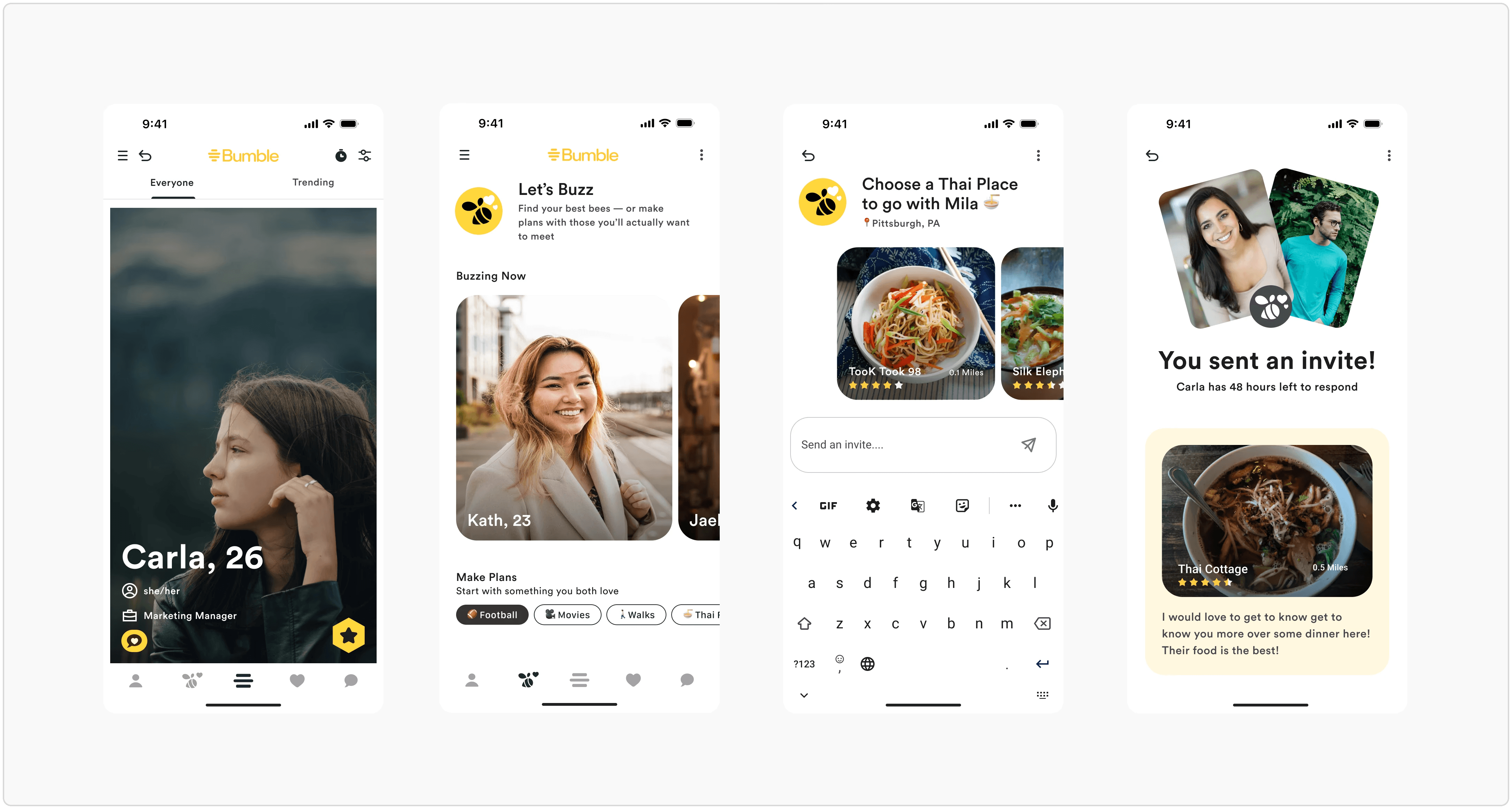
Let’s Buzz, a new feature that leverages shared interests and location-based recommendations to facilitate real-world interactions and improve perceived value in premium offerings.

Team

1 (solo)

Timeline

5 weeks

My Roles

Research

UX/UI Design

Prototyping

Concept Direction

Tools

Figma

The Challenge

This project explores how Bumble can increase subscription conversions by rethinking how users form meaningful connections across dating, friendship, and professional networking.

The Solution

Let’s Buzz, a new feature that leverages shared interests and location-based recommendations to facilitate real-world interactions and improve perceived value in premium offerings.

Team

3

Timeline

5 weeks

My Roles

Research

UX/UI Design

Prototyping

Concept Direction

Tools

Figma

The Challenge

This project explores how Bumble can increase subscription conversions by rethinking how users form meaningful connections across dating, friendship, and professional networking.

The Solution

Let’s Buzz, a new feature that leverages shared interests and location-based recommendations to facilitate real-world interactions and improve perceived value in premium offerings.

Team

3

Timeline

5 weeks

My Roles

Research

UX/UI Design

Prototyping

Concept Direction

Tools

Figma

The Challenge

This project explores how Bumble can increase subscription conversions by rethinking how users form meaningful connections across dating, friendship, and professional networking.

The Solution

Let’s Buzz, a new feature that leverages shared interests and location-based recommendations to facilitate real-world interactions and improve perceived value in premium offerings.

Team

3

Timeline

5 weeks

My Roles

Research

UX/UI Design

Prototyping

Concept Direction

Tools

Figma

OUTCOME
OUTCOME

A Fresh New Look

A streamlined experience designed to make connecting feel more natural and intuitive.

A streamlined experience designed to make connecting feel more natural and intuitive.

Best Bees Redesigned

Match by most compatible

Better Matches, Made For You

Discover people who align with your interests, not just your profile.

Discover people who align with your interests, not just your profile.

Filter by Interest

View profiles that match your vibe

Start With Shared Interests

Find common ground first to spark more meaningful connections.

Find common ground first to spark more meaningful connections.

Make the First Move

Send an invite by a shared interest

Choose Where to Meet

Get personalized spot recommendations based on what you both enjoy.

Get personalized spot recommendations based on what you both enjoy.

Personalized Spots

Get recommended first date ideas

Send the First Invite

Turn a match into a plan with a simple, confident first move.

Turn a match into a plan with a simple, confident first move.

48 hours to Respond

User can either accept or deny

CONTEXT

What is the Problem?

Bumble aims to convert its non-paying users into subscribers, particularly among users under 35 and those engaging in non-dating modes such as BFF and Bizz.

An Estimated

50 Million

Active Bumble Users

Only

2.73 Million

Users are subscribed to premium

Nearly a

40% Drop

in conversion for non-dating modes

Analyzing Bumble Premium

To fully understand the issue at hand, an analysis on the current mechanics of Bumble Premium is necessary.

To fully understand the issue at hand, an analysis on the current mechanics of Bumble Premium is necessary.

a. What Value does Bumble Premium Provide?
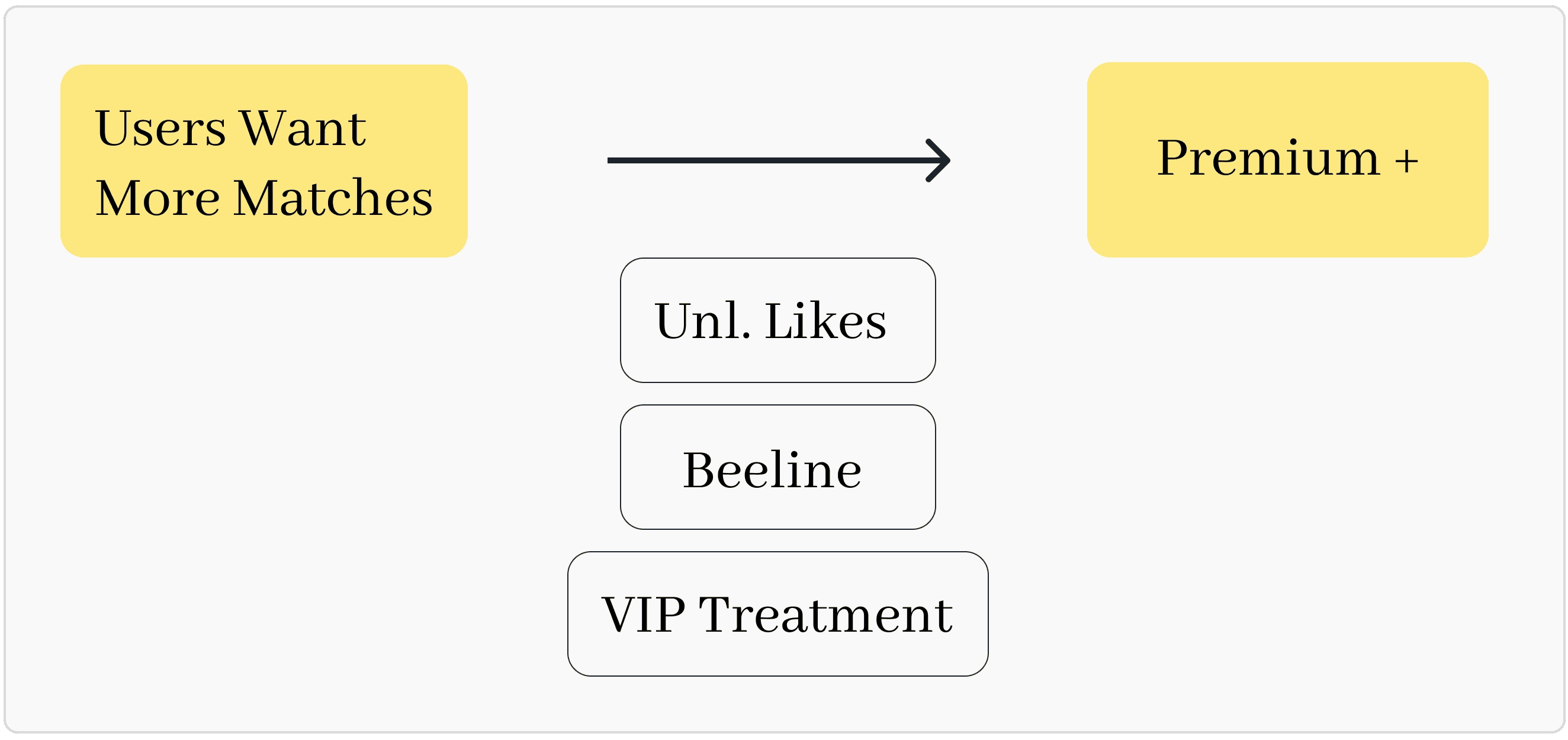
Current Framework of Increasing Conversions

b. Why Don't Users Convert?

Users aren’t motivated to convert because premium features don’t meaningfully improve their ability to form connections.

Users aren’t motivated to convert because premium features don’t meaningfully improve their ability to form connections.

Misaligned Goals

Users who are seeking non-dating matches are incongruent with Bumble's audience of date-seeking users.

Decreased Engagement

There is an overall lower retention rate for users who use the app more casually.

Unsatisfactory Results

Users seeking meaningful matches often struggle to find the connections they’re looking for.

How might we reframe the value of Bumble Premium for everyday users seeking quality connections?

RESEARCH

Reframing the Problem

Through whiteboarding, framework iteration, and analysis of quantitative data, I explored:

  • Behavioral patterns across modes

  • Relationships between location, usage frequency, and conversion

  • Social motivations behind connection-building

Bumble believes that by using the precise location services capability for proximity matchmaking, we can increase the number of converting users to paying subscribers.

Through whiteboarding, framework iteration, and analysis of quantitative data, I explored:

  • Behavioral patterns across modes

  • Relationships between location, usage frequency, and conversion

  • Social motivations behind connection-building

Bumble believes that by using the precise location services capability for proximity matchmaking, we can increase the number of converting users to paying subscribers.

  1. Why do users use Bumble?

Socialization

Whether romantic, social, or professional

Expanding Circles

outside their existing circles in a low-friction way

Intentional Matches

increased control of how they match and interact

Bumble's Value

b. Where are Users being Disengaged?
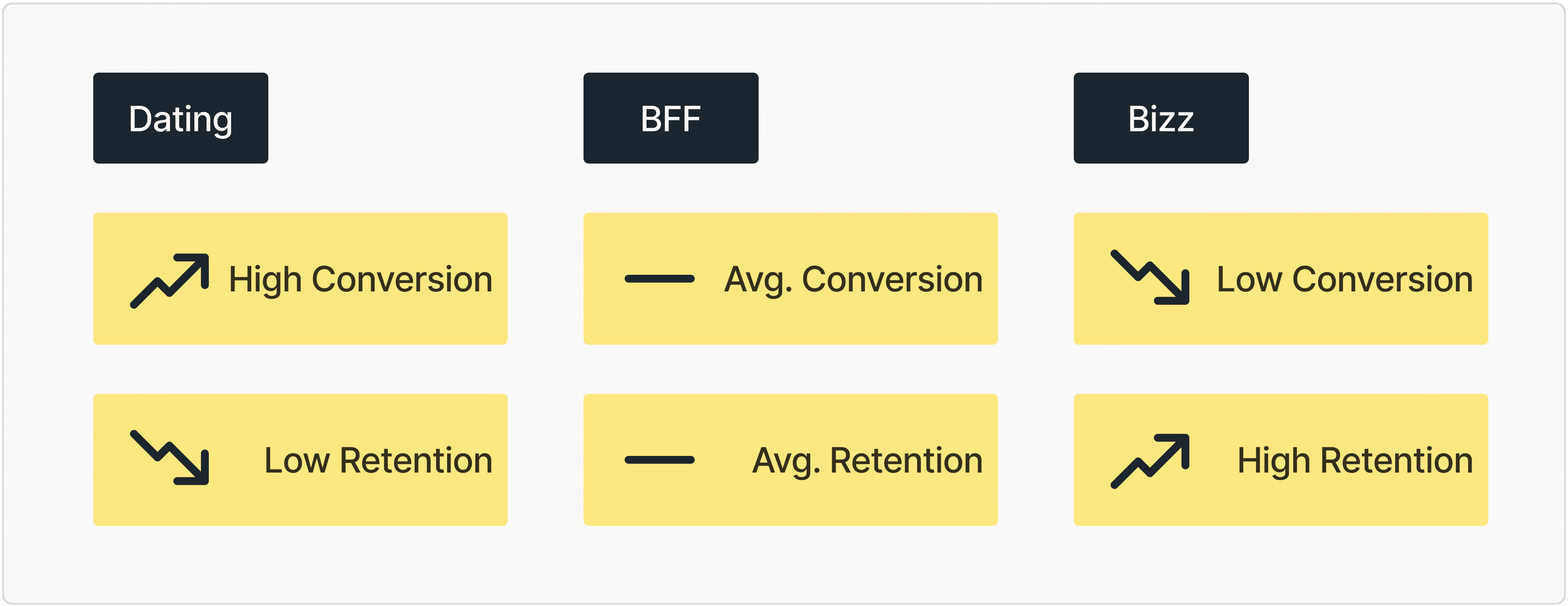
Conversions are lowest in Bizz and Retention rate is low for dating

c. Why Do Users Convert at Higher Rates in Dating?
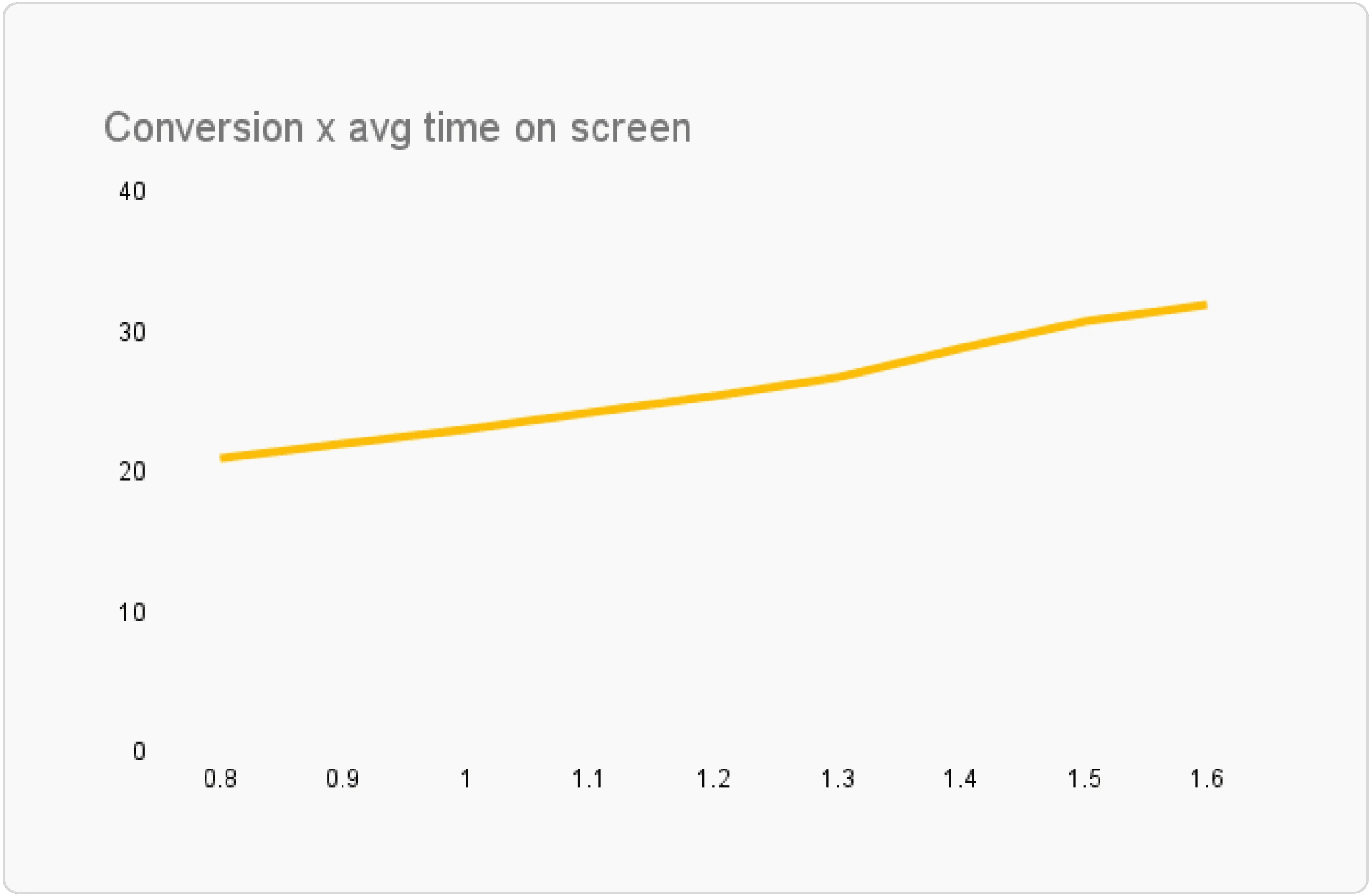
According to the data, there is a upwards trend between conversion rate and avg screen time, meaning that users who are using the app the most may be more likely to convert to paying customers.

According to the data, there is a upwards trend between conversion rate and avg screen time, meaning that users who are using the app the most may be more likely to convert to paying customers.

Conversion Rates & Average Increased time of use

How might we help users spend more time on Bumble by making connections more meaningful and actionable?

Identifying Product Opportunities

This reveals a broader issue: users are not struggling to find matches—they are struggling to find meaningful, actionable connections.

This reveals a broader issue: users are not struggling to find matches—they are struggling to find meaningful, actionable connections.

  1. Exploring Routes for Increased Engagement
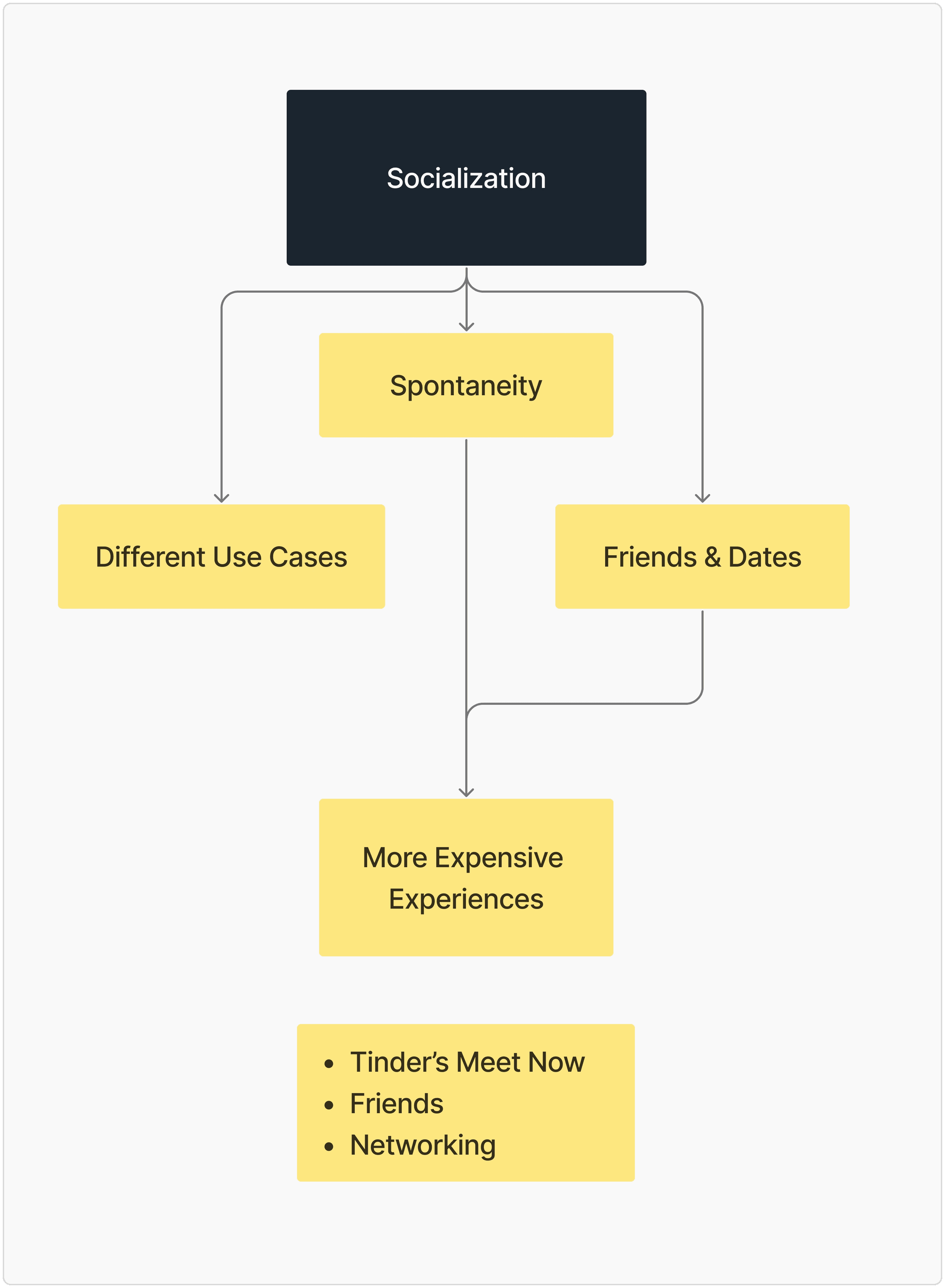
Product Opportunity Mindmap

b. Refining Design Concepts
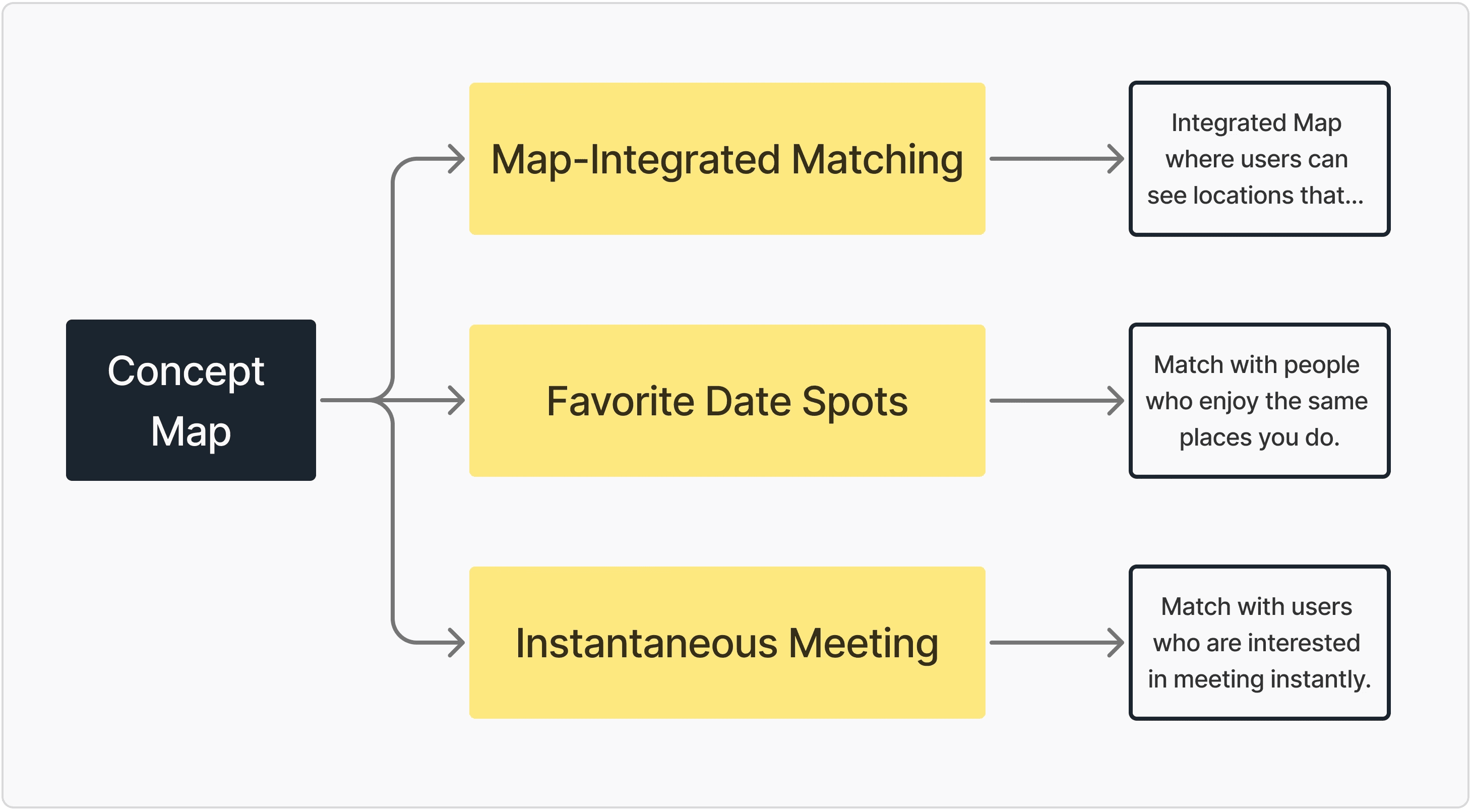
Refined Product Concepts

Proposed Framework & Concept

To fully understand the domain, we conducted a comprehensive stakeholder analysis to identify and better understand the users who would benefit from this product.

To fully understand the domain, we conducted a comprehensive stakeholder analysis to identify and better understand the users who would benefit from this product.

  1. Increasing Connections through Shared Interests
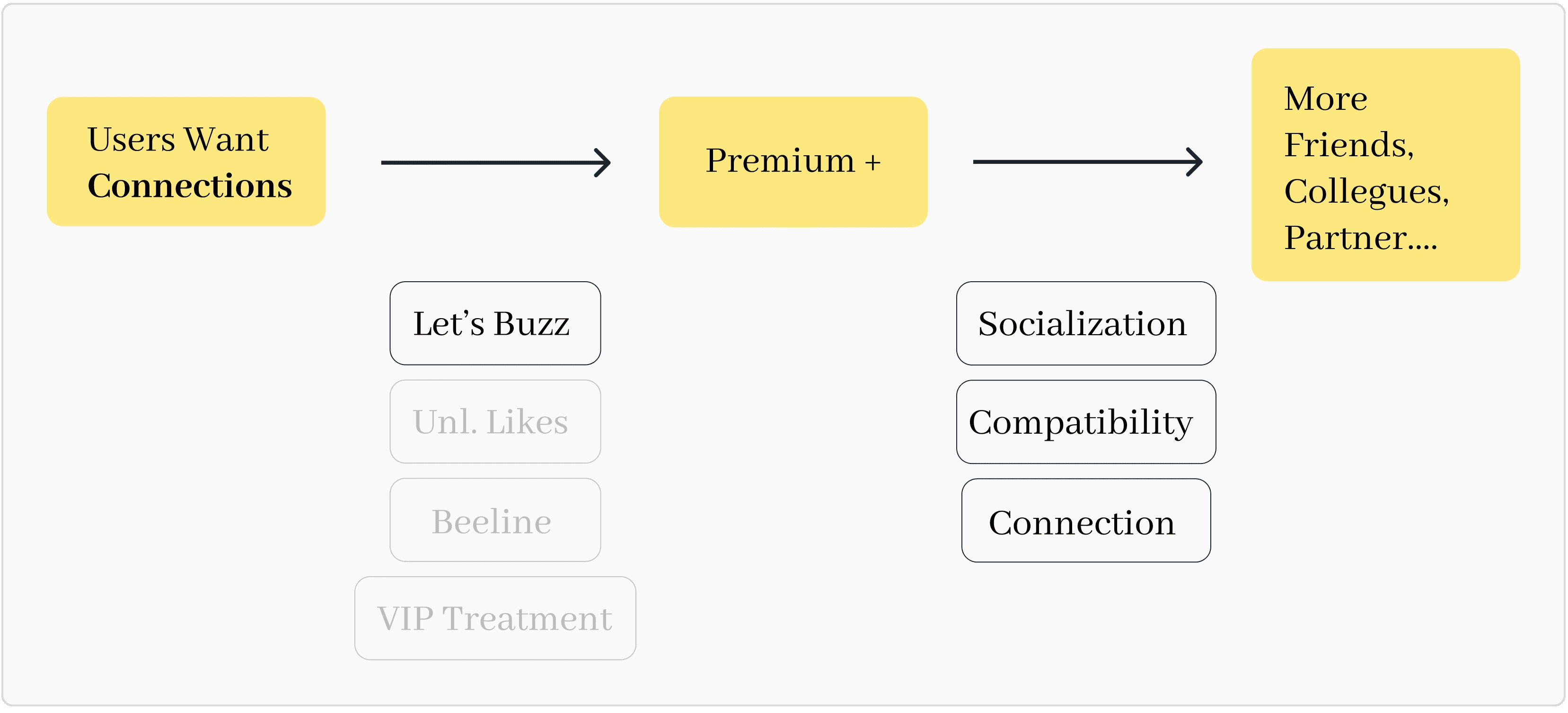
b. Increasing Connections through Shared Interests
Research Conclusion

Analysis of Bumble user behavior shows a consistent gap: users match frequently but struggle to turn those matches into meaningful interactions, especially in non-dating modes.

Conversion is driven less by match volume and more by perceived intent and clarity of next steps. Dating performs better because it naturally supports progression toward real-world interaction, while Bizz and BFF lack clear pathways beyond the match.

Users are most engaged when shared context (e.g., mutual interests) is evident, but the product does little to help them act on that alignment.

The core opportunity is not increasing matches, but improving what users can do with them—bridging the gap between matching and meaningful connection.

Analysis of Bumble user behavior shows a consistent gap: users match frequently but struggle to turn those matches into meaningful interactions, especially in non-dating modes.

Conversion is driven less by match volume and more by perceived intent and clarity of next steps. Dating performs better because it naturally supports progression toward real-world interaction, while Bizz and BFF lack clear pathways beyond the match.

Users are most engaged when shared context (e.g., mutual interests) is evident, but the product does little to help them act on that alignment.

The core opportunity is not increasing matches, but improving what users can do with them—bridging the gap between matching and meaningful connection.

DESIGN SYSTEM

Visual Design

This Design System defines components and styles for implementing a new digital Bumble feature, Let's Buzz.

Component Additions

  • Shared interest indicators (text + emoji)

  • Call-to-action modules for meetups

  • Location recommendation carousel

  • Invitation confirmation dialogs

These components extend the system while reinforcing Bumble’s established interaction patterns.

This Design System defines components and styles for implementing a new digital Bumble feature, Let's Buzz.

Component Additions

  • Shared interest indicators (text + emoji)

  • Call-to-action modules for meetups

  • Location recommendation carousel

  • Invitation confirmation dialogs

These components extend the system while reinforcing Bumble’s established interaction patterns.

  1. Component Library

Explore The Design System Above!

NEXT STEPS

Validate Feature Impact

Additional A/B testing would be necessary to measure the impact on conversion rates for Bizz, BFF, and Dating. Feature adoption would also be an important data-point to measure

Expand Recommendation System

Further expanding the location recommendation system to aid users in customizing their experience, while also discovering new locations through integrated chat features.

Refine Onboarding

Increasing feature adoption is very necessary in maximizing the value of the product for users. Refining the onboarding process and defining in-app tokens to gamify date locations, increasing user retention.

REFLECTION

Understanding Why Users Convert

Understanding user behavior and the value they find in Bumble's product was necessary in refining where users stick to and where customers are being lost.

What Makes Connections Meaningful

Designing with customers in mind while still pushing for increased Bumble premium retention, required balancing constraint with new features that support Bumble's overall ethos and goals.